
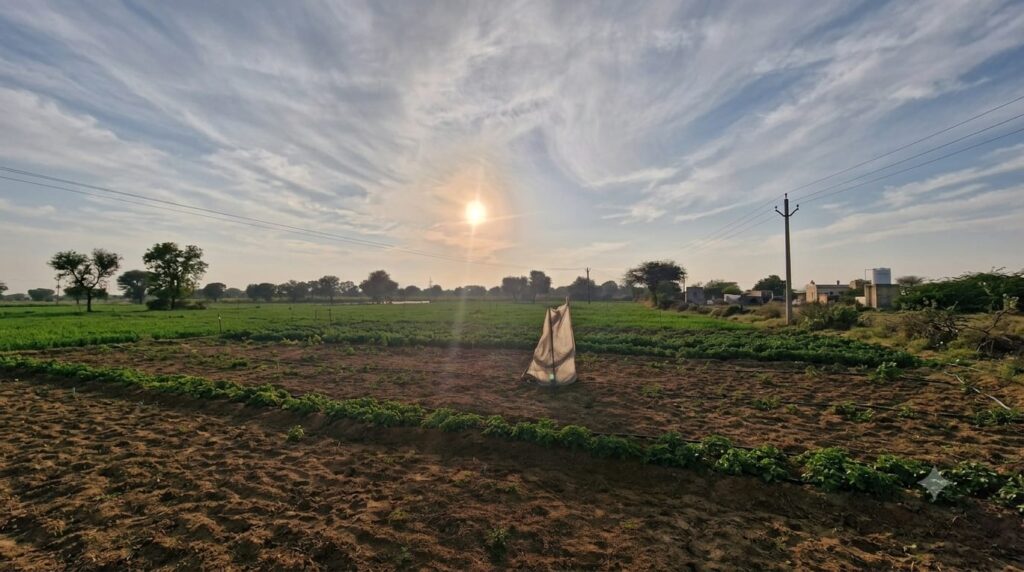
Extreme Weather Conditions in Summer in Rajasthan
Rajasthan, the land of deserts, is known for its rich culture and traditions. But is culture and tradition all that the state is known for? Beyond its vibrant culture and traditions, Rajasthan is also known for its extreme and often unpredictable climatic conditions. Most of us are aware of the water scarcity faced by the state, but do we really know what causes it?
The answer lies in the harsh conditions of summer in Rajasthan that bring extreme temperatures, heat-waves, dust storms, and increasing pressure on water resources. These challenges have a direct impact on farming and crop production across the region.
In this article, we explore how heat-waves, water scarcity, and dust storms create challenges for crop production and farming in Rajasthan.
Heatwaves and Extreme Temperature
Ever heard of loo? These hot and dry winds are commonly known as heat waves and are among the most challenging weather conditions for farming in Rajasthan.
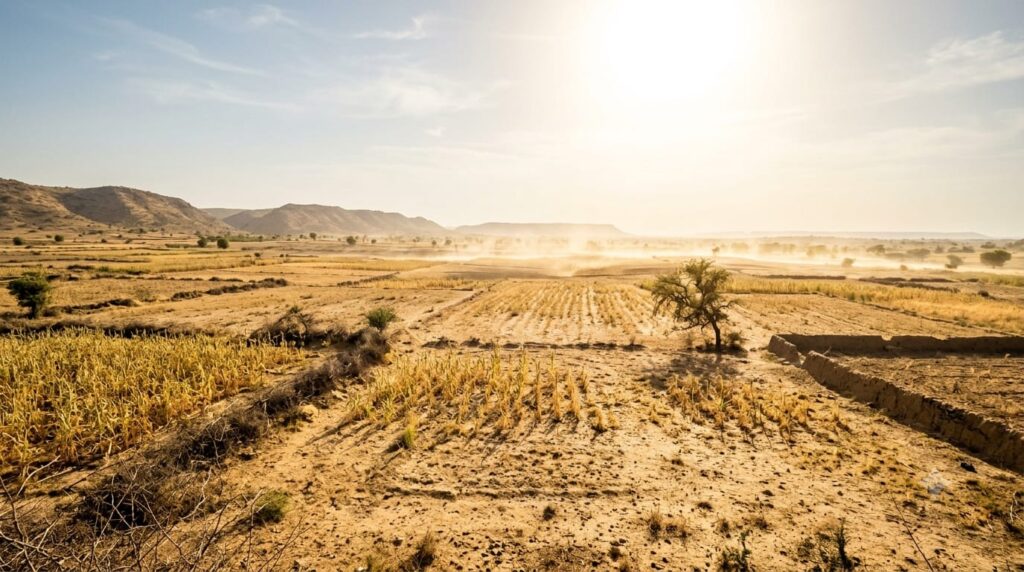
The sandy desert soil, popularly known as balu mitti, heats up rapidly during peak summer months. As temperatures continue to rise, crops face severe heat stress.
Just like extreme heat can be harmful to humans, it can also affect the health and growth of crops. Plants require a certain level of moisture to survive and perform essential functions such as growth, flowering, and fruit development.
Crops are not protected from extreme temperatures the way we protect ourselves. They have to withstand the harsh weather conditions while rooted in the same soil day after day.
Heatwaves can lead to:
- Reduced soil moisture
- Faster water loss from plants
- Wilting of crops
- Poor flowering and fruit development
- Lower crop yield
For farmers, the loss of crops is more than an agricultural challenge—it directly translates into financial losses after months of hard work and investment.
Water Scarcity and its impact on crops
Water scarcity is one of the most discussed challenges in Rajasthan, and the situation continues to affect farming in Rajasthan with each passing year.
Major causes of water scarcity include:
- Declining groundwater levels
- Irregular rainfall
- High evaporation during summers
- Increasing irrigation demand
In many parts of the state, groundwater levels have been declining steadily. Wells that once provided reliable access to water now need to be dug much deeper, making irrigation more difficult and expensive for farmers.
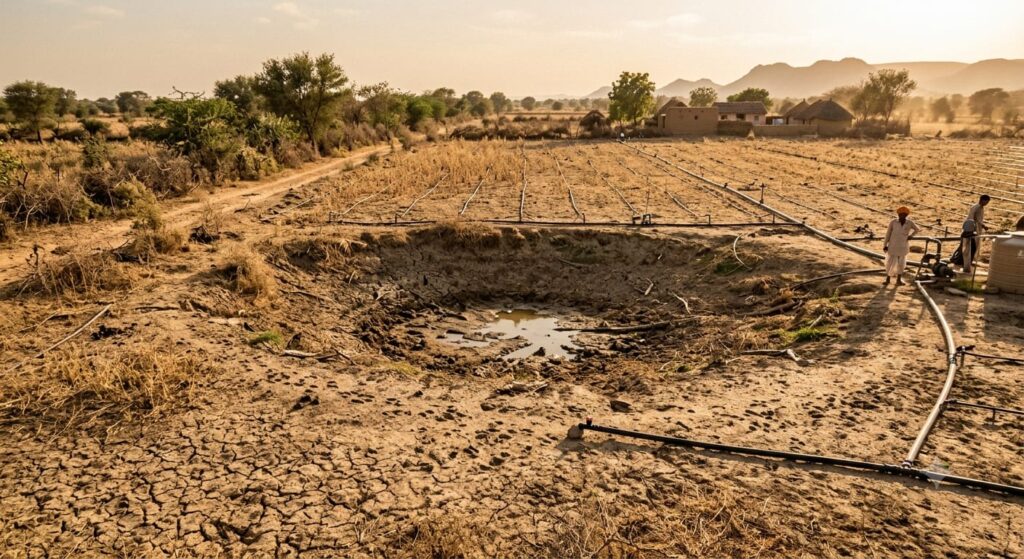
During summers, crops require more water than usual to withstand high temperatures and heat stress. Unfortunately, this is often the time when water availability is at its lowest.
Rainfall remains the primary source of groundwater recharge. However, irregular rainfall patterns and prolonged dry periods make it difficult to restore water reserves, leaving farmers dependent on limited water resources.
As a result, crops suffer from moisture stress, reduced growth, lower yields, and in severe cases, crop failure.
Dust storms: A major summer challenge
Dust storms are among the most significant summer challenges faced by farmers in Rajasthan. Their impact extends beyond crop production and affects agricultural infrastructure as well.
A powerful storm lasting only an hour or two can undo months of hard work. Crops often struggle to withstand strong winds, and in severe cases, entire fields may suffer extensive damage.
Once the storm passes, it leaves behind more than physical destruction. The damaged fields silently reflect the efforts, time, and resources invested by farmers throughout the growing season.
The impact of dust storms is not limited to crops alone. Sheds, irrigation systems, tubewells, pipelines, nozzles, and other farm infrastructure can also be damaged. Many people consider such assets to be one-time investments, but repeated exposure to harsh weather conditions often results in additional repair and replacement costs.
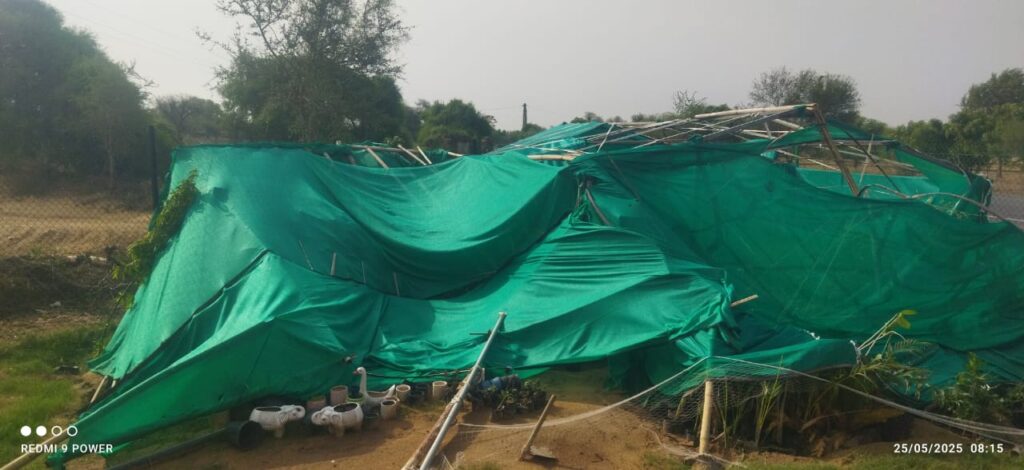
As a result, dust storms create both agricultural and financial challenges, making farming in Rajasthan increasingly difficult during the summer months.
Long term impact on soil fertility
The soil used for decorative plants in pots can be replaced whenever required. Traditional and commercial farming, however, depends on the same land season after season. This makes soil health one of the most valuable resources for farmers.
The top layer of soil, often considered the most fertile, contains essential nutrients and organic matter that support plant growth. During dust storms, a portion of this valuable topsoil can be lost through erosion.
Soil fertility also depends on adequate moisture. Extreme temperatures accelerate water loss from the soil, reducing its ability to support healthy crop growth. At the same time, irregular rainfall and limited groundwater recharge further increase the pressure on agricultural land.
Over time, these conditions can affect soil structure, nutrient availability, and overall productivity. While fertilizers and soil management practices can help improve fertility, maintaining healthy soil becomes increasingly challenging under harsh and unpredictable weather conditions.
ThakurJi Organics’ Experience
At ThakurJi Organics, we practice organic farming and have experienced firsthand the challenges that extreme weather conditions can bring.
How does it feel when you are all set to enjoy your favorite meal and someone suddenly turns your plate upside down? Disappointing, isn’t it? For many farmers, a sudden storm feels exactly like.
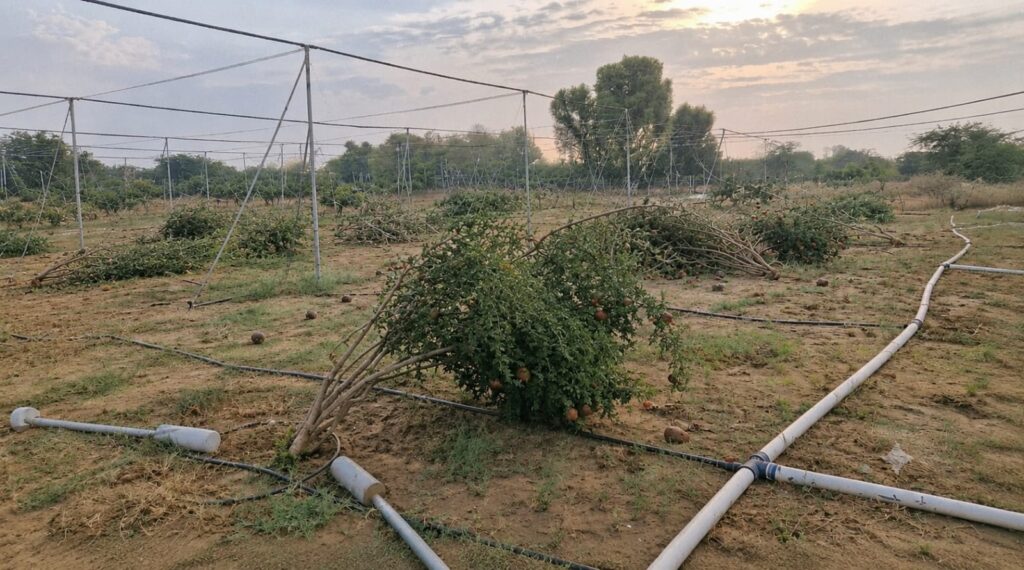
After months of hard work, investment, planning, and care, farmers look forward to a successful harvest. Yet, a single storm can change everything. Strong winds can damage crops within hours, leaving behind fields that once promised a good yield.
Over the years, we have adopted various organic practices to improve soil health and maintain fertility. We also focus on rainwater harvesting and water conservation to reduce the impact of water scarcity. These efforts help us prepare for many challenges, but nature sometimes reminds us that not everything is within our control.
Storms remain one of the toughest challenges we face. However, setbacks have never defined our journey.
We fall. We learn. We stand again.
Wondering how this journey began? Read our story here.
And just like countless farmers across Rajasthan, we continue to sow, nurture, and hope—season after season.
Conclusion
As we conclude, one thing becomes clear: while we can plan, prepare, and make informed decisions, nature will always remain beyond our control.
The harsh summers of Rajasthan remind us that farming is not just about sowing seeds and harvesting crops. It is also about understanding nature, respecting its power, and adapting to its challenges.
Fighting against nature may lead to frustration, but learning to grow with it can lead to resilience and sustainability. For farmers, every season brings new challenges, but it also brings new opportunities to learn, adapt, and move forward.
After all, agriculture is not a battle against nature—it is a partnership with it.
Have questions or would like to connect with us? Contact Us
Extreme summer conditions such as heatwaves, water scarcity, and dust storms reduce soil moisture, stress crops, and lower agricultural productivity.
Low rainfall, declining groundwater levels, and high summer temperatures make irrigation difficult, affecting crop growth and yields.
At ThakurJi Organics, we focus on organic farming, improving soil health, conserving water through rainwater harvesting, and adopting sustainable farming practices to reduce the impact of extreme weather.